The Future of the U.S. Housing Market: Insights for 2026
Home365
Jan.16.2026
TL;DR:
The U.S. housing market is entering 2026 with signs of stabilization. Home prices are expected to rise modestly (~1-3%), and mortgage rates may dip into the low-6% range, providing slight relief for buyers.
Inventory remains tight but is slowly improving. Buyers should see more options and less frenzy than the past two years, though supply is still below normal levels in many areas.
Affordability will improve slightly as wages outpace home prices for the first time in years. However, housing costs are still high – the typical monthly payment on a median home is now over $2,100 (more than double the pre-pandemic cost) – so many first-time buyers and young families will continue to face challenges.
Key 2026 trends include easing mortgage rates, a gradual uptick in home sales, and creative adaptations to high costs (like multigenerational living and co-buying). This article provides a current market overview, 2026 forecasts, and practical tips (including a checklist of questions to ask) to help homeowners and investors navigate the year ahead.
Home365 offers guidance and tools (like a guaranteed-rent Profit Protect plan and a real-time Owner Portal) to help property owners make confident decisions in this evolving market.
Introduction: A Volatile Market Finds Its Footing
The past few years have been a rollercoaster for the U.S. housing market. After a pandemic-fueled buying frenzy sent home prices soaring, a sharp jump in interest rates cooled the market. Yet even as fewer people can afford to buy, home prices remain near record highs. This paradox – low sales but high prices – has many Americans asking: What’s next for housing? In this article, we’ll explore where the market stands now and what experts predict for 2026, along with actionable insights to help plan your next move in real estate.
The U.S. Housing Market Now: High Prices, Low Supply,
Strained Buyers
What’s Ahead in 2026: Key Predictions and Trends
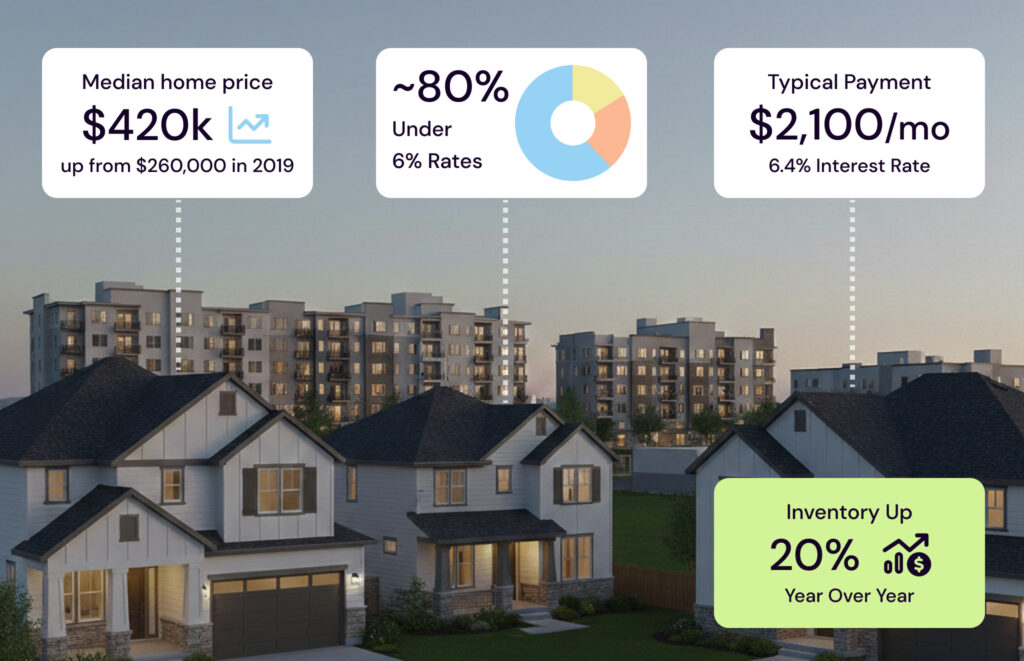
Home sales have plunged to their lowest levels in over a decade as mortgage rates soared, pricing many buyers out. But prices haven’t crashed because supply is incredibly tight. Many owners are “locked in” to low interest rates – about 80% of mortgage holders have rates under 6%, and half under 4% – so they’re unwilling to sell and take on a higher rate. With buyers having few options, home values remain elevated. Despite the cooldown, prices are roughly 60% higher than in 2019. The median home now costs around $420,000 (versus $260,000 pre-pandemic), and at ~6.4% mortgage rates the monthly payment for a typical home is above $2,100 – more than double the ~$1,000 payment a few years ago. It’s no wonder affordability is a major hurdle.
The cost crunch is changing how people live. Many would-be buyers are staying in the rental market longer, often doubling up with roommates or family to save money. After a surge of new apartments briefly cooled rents, rental demand is rising again, and more people are living with extended family to save on housing costs.
There are hopeful signs as well: inventory has inched up (about 20% year-over-year), giving buyers more breathing room. Bidding wars have faded, and sellers can no longer overprice their homes – some are cutting asking prices or withdrawing listings that don’t sell. The market is starting to rebalance heading into 2026.
Housing experts agree 2026 won’t bring another boom, but it should mark the start of a gradual rebound toward a healthier market. Here are the key trends to watch:
Mortgage Rates Ease: Relief is in sight for buyers. After peaking around 7% in 2023, 30-year mortgage rates are expected to hover in the low-6% range in 2026, possibly dipping below 6% at times. While we won’t see 3% loans again soon, this slight drop will shrink monthly payments and help bring some sidelined buyers back into the market.
Prices Steady, Sales Rebound: Don’t expect prices to plummet – home values will likely rise only around 1-3% in 2026. With the ongoing housing shortage, major price declines are unlikely. However, stagnant prices (along with a bit more inventory and improved affordability) should lead to a modest uptick in home sales after the slump of the past two years.
Affordability Slowly Improves: For the first time in years, incomes are projected to rise faster than home prices, gradually improving buyers’ purchasing power. Along with slightly lower rates, this means the typical mortgage payment could actually ease a bit in 2026 – a welcome change. Housing will still be expensive relative to pre-2020 norms, so many first-time buyers will continue to make sacrifices, but conditions will be a bit less daunting than before.
Regional Variations: Some overheated Sun Belt markets could cool off (e.g. parts of Florida or Texas), while more affordable areas in the Midwest and Northeast see stronger demand. Climate resilience is also emerging as a factor, as buyers consider insurance costs and disaster risks when choosing where to live.
Practical Tips for Homeowners and Investors
Whether you’re looking to buy, sell, or manage an investment property, it’s wise to adjust your strategy for the 2026 landscape. Here are some tips to navigate the market:
Plan Your Financing and Budget: If you aim to buy a home, get your finances prepped. Watch mortgage rates and get pre-approved so you can act quickly when an opportunity comes up. Calculate what you can truly afford with today’s ~6% rates – monthly payments are much higher than a few years ago, so be realistic. Also factor in the “new normal” costs of homeownership: property taxes, insurance, and maintenance (especially in high-risk areas) are higher now. Make sure you have a cushion for these expenses on top of your mortgage.
If You’re Selling, Be Realistic: In a cooler market, pricing and presentation matter more than ever. Work with a savvy agent to set a fair, competitive price – buyers in 2026 have more options and won’t bite if your home is overpriced. Invest a little effort in curb appeal and fixing any glaring issues to make a strong first impression. And be patient: your home may not sell in a weekend like it might have in 2021. By staying flexible and open to negotiations, you’ll improve your chances of a timely sale.
Optimize Your Rental Operations: For landlords, 2026 is the time to focus on efficiency and tenant retention. With only moderate rent growth expected, keeping good tenants is crucial – an empty unit for even a month can eat into your profits. Stay on top of maintenance and respond quickly to issues to encourage renewals. It also helps to leverage technology: the Home365 Owner Portal lets you track rent payments, maintenance tickets (with photos), and financials in real time, giving you full transparency on your property. Combining smart tools with proactive management will help maximize your returns.
Top 5 Questions to Ask When Buying a Home in 2026
“What can I truly afford at today’s interest rates?” – Before house hunting, crunch the numbers with current mortgage rates (~6%). A home that fit your budget at 3% interest might be too expensive now. Use updated mortgage calculators and consider getting pre-approved to clarify your price range. This keeps your search realistic from the start.
“Should I buy now or wait for rates to drop more?” – Timing the market is tricky. Rates might ease a bit further, but they’re not expected to plummet back to 2021 levels. If you find a home you love and can afford the payments, buying sooner lets you start building equity (and you can refinance later if rates fall). On the other hand, if you’re barely scraping by, it could be wise to wait and save more – just remember that home prices and rents may inch up while you wait.
“What are the local market conditions?” – Real estate is local, so study the area where you want to buy. Are homes selling quickly or lingering for months? Are prices climbing or flattening out? In 2026, some markets will favor buyers (with more inventory or stabilizing prices) while others will remain competitive. Knowing the local trends will help you decide how aggressive to be with offers and negotiations.
“Am I prepared for all the costs of owning?” – Beyond the mortgage, can you handle the other expenses that come with homeownership? Factor in property taxes, homeowners insurance, possible HOA dues, and routine maintenance. If you’re buying in an area prone to natural disasters, budget for higher insurance premiums, too. Homeownership brings equity and stability, but it also means you’re on the hook for repairs and upkeep – make sure you’re financially ready.
“Are there programs or incentives that can help me?” – Especially for first-time buyers, it’s worth exploring assistance options. By 2026, we may see new or expanded first-time buyer programs or tax credits as policymakers address affordability. Also ask your lender about loans that offer lower down payments (like FHA, VA, or USDA loans, if you qualify). Every bit of help – a grant, a favorable loan, or even seller concessions – can make a big difference in getting you into your new home.
Conclusion: Moving Forward with Confidence
The U.S. housing market in 2026 promises to be calmer and more balanced than the frenzy of the early 2020s. Challenges like high prices and limited supply haven’t disappeared, but conditions are gradually improving – more inventory is opening up and more buyers can finally enter the market, leveling the playing field. By staying informed and adapting your strategy, you can make the most of these changes and find opportunities in the evolving landscape.
Home365 is here to help along the way. Our tech-driven property management and unique guarantees give homeowners and investors an edge in any environment. If you have questions about your 2026 real estate plans, reach out to us for guidance. With the right insights – and the right partners – you can approach 2026’s housing market with confidence.
A significant drop is unlikely. Experts predict home prices will hold steady or rise slightly (roughly 1-3%) in 2026. The ongoing shortage of homes for sale should keep a floor under prices. Some overheated local markets might see minor dips, but a nationwide crash is not expected barring a major economic downturn.
Are mortgage rates going to go down next year?
Slightly, yes. Mortgage rates in 2026 are projected to average in the low 6% range, a bit lower than 2025’s levels. They might even dip just below 6% at times if economic conditions allow. That’s some relief compared to the ~7% rates of 2023, though we’re not returning to 3% territory. Expect rates to hover around 6% rather than falling dramatically.
Is 2026 a good time to buy a house?
It’s looking better than recent years for buyers. You’ll likely face less competition than in the pandemic boom – homes aren’t flying off the market in mere days, and bidding wars are rarer. Mortgage rates will still be higher than a few years ago, but a bit lower than 2025. Affordability should improve modestly. If you’re financially prepared, 2026 could be a good window to purchase. Just be sure the monthly payments (and upkeep costs) fit your budget, because rates are still elevated by historical standards.
How will the 2026 market affect renters?
Renters will probably see moderate rent increases. After a brief lull, rents are expected to rise around 2-3% in 2026, about on par with inflation. This is mainly because many people continue renting (some by choice, others because buying is too expensive) and fewer new rental units are being built. If you’re renewing a lease, expect a typical annual rent bump. On the bright side, if slightly lower home prices and rates enable more renters to become homeowners, that could eventually ease pressure on the rental market.
What can real estate investors do to succeed in 2026?
Focus on fundamentals and risk management. Make sure any property you buy can generate positive cash flow under current conditions – run the numbers with realistic rent and mortgage rate assumptions. It’s also a great time to streamline operations: minimize vacancies, keep up with maintenance, and use tools like Home365’s portal for real-time oversight. If you want extra stability, consider a service like Home365’s Profit Protect plan, which guarantees rent and covers many repair costs. That kind of safety net ensures your cash flow isn’t disrupted by surprises. In short, treat your investments like a business: control costs, keep tenants happy, and mitigate risks, and you’ll be well-positioned as the market improves.
How does Home365 help in this market?
Home365 offers a modern, tech-driven property management solution designed for predictability and peace of mind. We handle the day-to-day tasks of being a landlord – marketing your property, screening tenants, collecting rent, and coordinating repairs – while giving you full visibility through our online Owner Portal. What really sets us apart is our Profit Protect plan: we guarantee your rental income and cover routine maintenance, so you’re protected from vacancies or surprise bills. Essentially, we absorb the uncertainty so you can enjoy steady, passive income. In a transitioning market like 2026, that kind of reliability can be a game-changer for anyone renting out a home.








 Back
Back